
In the vast and enchanting realm of Dungeons & Dragons (DnD), the power of visualization stands paramount. While narrating tales of gallant knights, arcane mages, treacherous dungeons, and majestic landscapes, the essence of immersion lies in the ability to see, even if just in one’s mind. Traditionally, players relied on detailed verbal descriptions, hand-drawn sketches, or pre-made illustrations. But today, with the rise of advanced AI technologies like MIdjourney, we stand on the precipice of a revolution. Midjourney prompts are transforming the way we imagine and visualise the DnD universe.
As we explore the art of crafting these prompts, we invite you on a journey of discovery, where words become images, and every story finds its canvas. Welcome to the magic of merging DnD with Midjourney.
The magic of merging Midjourney and DnD
The world of Dungeons & Dragons (DnD) is a tapestry woven with intricate details, sprawling narratives, and a depth that can immerse its participants for hours on end. Within its confines are fantastical creatures, sprawling cities, forbidden magics, and tales of heroism that have been the heartbeat of countless gaming sessions around the world.
Now, imagine introducing a tool that can breathe life into this realm, providing tangible visuals at the whim of a Dungeon Master’s description. This is the magic we witness when we merge the capabilities of AI with the universe of D&D.
DnD’s vast and detailed universe: A perfect playground for using Midjourney
The very nature of DnD thrives on imagination and detail. Every character, from a simple merchant in a town square to a celestial dragon soaring the ethereal skies, has layers of history, personality, and appearance. Traditionally, these details would rest in the mind’s eye, with the onus on the narrator to describe and the players to visualise. But with Midjourney, this vastness and granularity become its strength.
Midjourney does not get overwhelmed by details; instead, it thrives on them. The more specific a scene or character is described, the more vividly can the Midjourney bot paint it. DnD’s penchant for detailed storytelling, therefore, becomes a playground where Midjourney can flex its imaginative prowess, generating images that previously only existed in our wildest imaginations.
The Role of visual aids in enhancing role-playing games
Role-playing games (RPGs) like DnD rely heavily on immersion. The success of a campaign often hinges on how deeply players feel connected to the story, their characters, and the world they navigate.
While excellent narration is undoubtedly the backbone of this immersion, visual aids act as catalysts. They provide concrete representations, eliminate ambiguities, and set the mood. A dimly lit tavern with suspicious-looking patrons tells a different story than a bustling market square on a sunny day. By utilising Midjourney images, DMs can present scenes, NPCs, or pivotal moments with more than words. They can show players the crimson hue of a potion, the menacing stance of a lurking goblin, or the grandeur of an ancient temple. Such visual aids augment storytelling, ensuring that everyone at the table shares a unified vision, thereby deepening their collective engagement and experience.
As DnD and Midjourney come together, they unlock a dimension where the boundaries of imagination are continuously expanded. In this synergistic dance, every narrative finds its visual counterpart, ensuring that the stories we tell are not just heard, but truly seen.
Types of DnD imagery and their potential Midjourney prompts
Characters
Examples:

/imagine: a tiefling bard playing a lute with flames

/imagine: an elf rogue sneaking in the shadows with a dagger
Landscapes
Examples:

/imagine: a bustling city square in a mountain dwarven city

/imagine: a tranquil forest grove illuminated by fey lights
Items and artefacts
Examples:
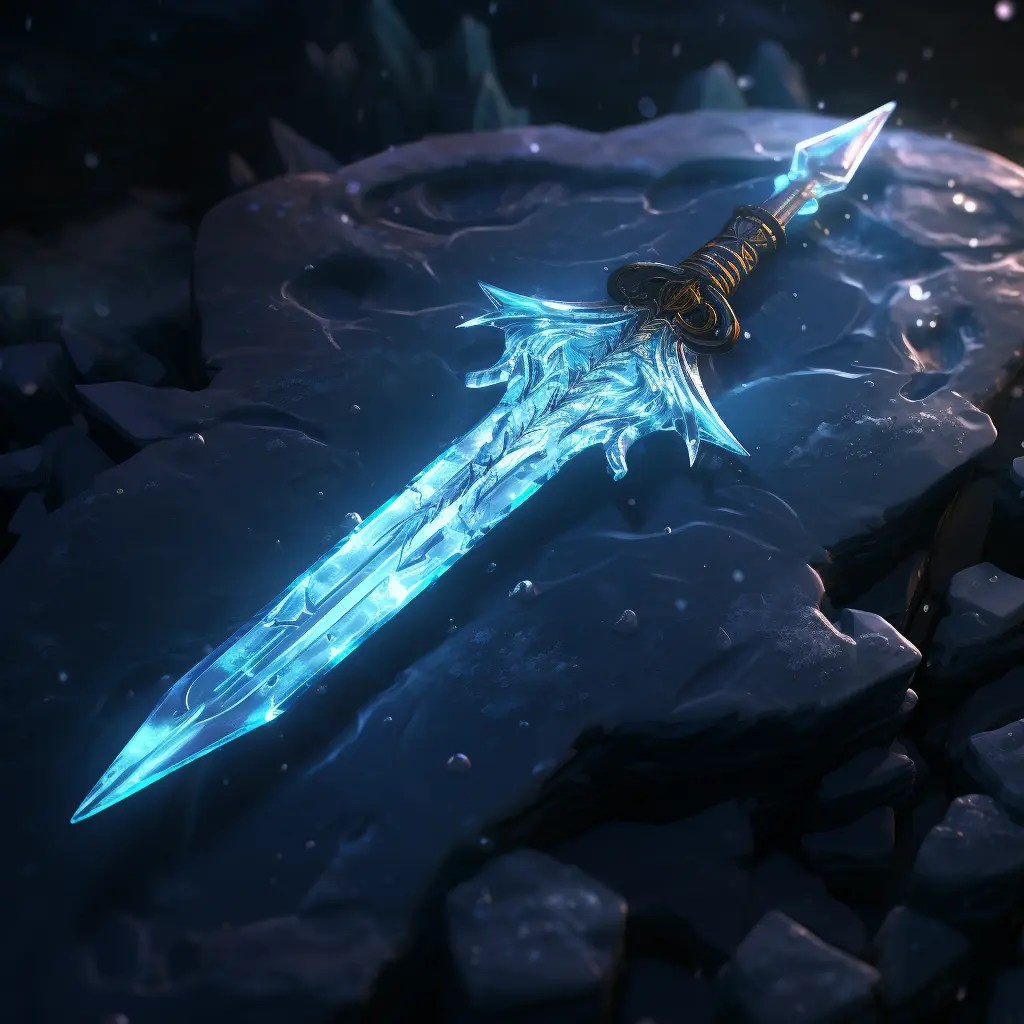
/imagine: a glowing sword encased in ice

/imagine: a mysterious potion bubbling with a purple hue
Monsters and creatures
Examples:

/imagine: a beholder floating in a dark cavern

/imagine: a dragon sleeping on a hoard of gold
Tips for crafting effective Midjourney prompts for DnD imagery
Crafting the perfect Midjourney prompt to obtain a visually stunning and accurate image, especially in the realm of Dungeons & Dragons (DnD), requires a blend of precision, imagination, and understanding of the underlying technology. As my expertise has grown over the last year, I can share some insights and techniques to master this art.
Strike a balance: Specificity vs. creative freedom
Be specific: If you have a clear vision, detail it. For instance, instead of saying “a wizard,” specify “a bearded old wizard with a crescent moon staff, wearing blue robes adorned with silver stars.”
Allow creative freedom: If you’re looking for inspiration or unique results, keep it broad. A simple “goblin in a swamp” can yield various interpretations and surprise you with Midjourney’s creativity.
The power of adjectives
Adjectives are your paintbrush. “A dragon” can turn into “a majestic golden-scaled dragon” or “a menacing, shadowy dragon with fiery red eyes.” Think about the mood, colour, size, and other defining characteristics to set the visual tone.
Setting the scene
Think of your prompt as a movie scene. Set the environment. Instead of “a castle,” opt for “a castle atop a misty mountain with ivy-covered walls and flying banners.”
Remember the DnD universe thrives on atmosphere. Include elements like “under the pale moonlight,” “amidst a roaring thunderstorm,” or “beneath the ancient, twisted trees.”
Formulaic approach to building prompts
- Start with the main subject: “a [creature/character]”
- Add defining characteristics: “[adjective] [creature/character]”
- Incorporate action or pose: “[adjective] [creature/character] [verb/ing]”
- Set the environment or background: “[adjective] [creature/character] [verb/ing] in/on/near [adjective] [location]”
For instance, using the formula:

/imagine: a fierce orc warrior wielding a double-edged axe in a sunlit glade surrounded by tall pines
Leverage keywords for best results
Some words or terms evoke stronger or clearer imagery. For D&D settings, keywords such as “enchanted,” “eldritch,” “medieval,” “mystical,” “arcane,” and “forgotten” can enhance the atmosphere and direct Midjourney towards more thematic results.
Understanding Midjourney’s limitations and strengths
Limitations: Midjourney is not perfect. Some intricate or highly abstract concepts might not be rendered as you expect. It’s essential to be patient and willing to iterate on your prompts.
Strengths: Midjourney thrives on detail and clarity. The more vividly you can describe something, the closer the result should be to your vision.
Crafting prompts is a blend of art and science. With practice and understanding, you can consistently produce breathtaking DnD images that elevate your gameplay and storytelling. Remember, every prompt is a portal to a world of imagination – the key is in your hands.
Applications for DnD games
The realm of Dungeons & Dragons has always thrived on creativity, collaboration, and immersion. For years, Dungeon Masters (DMs) and players have utilised various tools, from hand-drawn maps to meticulously crafted miniatures, to bring the game’s vivid world to life. With the integration of Midjourney imagery, this vast universe has the potential to be even more vibrant and tangible. Let’s explore some of the transformative applications of this technology in DnD games:
1. Enhancing campaign settings and atmosphere
Every DnD campaign carries with it a unique ambiance, be it the eerie mists of a haunted moor or the bustling energy of a royal coronation. Midjourney can provide DMs with bespoke visuals tailored to their narrative. Need a serene lakeside village shrouded in dawn’s mist? Or perhaps a desolate wasteland scarred by magical warfare? With the right prompt, Midjourney can generate these backgrounds, amplifying the setting’s mood and giving players a clearer “window” into the world they’re traversing. The ability to instantly generate such visuals means the atmosphere remains palpable and immersive throughout the campaign.
2. Visual aids for players to understand scenes or characters
No matter how eloquently a DM describes a scene or character, there’s always a degree of subjectivity in how players visualise them. Midjourney can bridge this gap. By presenting an image of a grand castle’s throne room, the ornate attire of a foreign diplomat, or the unique features of a rare creature, players no longer need to piece together disparate descriptions. They receive a consistent and shared vision, ensuring that all players “see” the story from the same vantage point. This not only aids comprehension but also fosters deeper emotional connections to the narrative.
3. Inspiration for DMs for creating scenarios or NPCs
Even the most seasoned DMs can sometimes hit a creative block. Midjourney can be a boon in these situations. By inputting a few broad keywords or themes into the it, DMs can receive a plethora of visual inspirations. An image of a rugged coastline might inspire a pirate-themed adventure. A portrayal of a mysterious hooded figure lurking in an alley can lead to an entire subplot revolving around a secretive guild. These images can serve as springboards for scenarios, plot twists, or the introduction of non-player characters (NPCs), ensuring that the narrative remains fresh and engaging.
In essence, the integration of Midjourney into DnD offers a dynamic toolkit to DMs and players alike. It promises not just enhanced visualisation, but a more enriched, cohesive, and inspired gaming experience. The tales spun around the gaming table are set to be more vivid than ever, blurring the lines between imagination and reality.
Conclusion
As the realms of technology and fantasy storytelling intertwine, we find ourselves on the cusp of a new era in role-playing and narrative experiences. The integration of Midjourney into the rich tapestry of Dungeons & Dragons is emblematic of how modern tools can amplify age-old traditions, bringing stories to life in ways previously relegated to the domain of imagination alone. It’s a testament to human creativity, where linguistic artistry meets digital genius to create a shared, vivid universe.
For Dungeon Masters, players, and enthusiasts, these advancements offer an enhanced gateway into beloved worlds, ensuring that the tales of heroism, intrigue, and adventure are not only told but vividly visualised. As we close this chapter, we’re left with the exciting promise that the future of DnD, bolstered by Midjourney, holds tales more vibrant and immersive than we’ve ever known.