In this article, we’ll walk through ten essential tips for crafting Midjourney prompts that yield breathtaking fantasy maps. From snow-capped peaks of ethereal beauty to the bustling streets of a labyrinthine city, mastering the art of Midjourney prompts is your ticket to realising your wildest cartographic dreams.
Accompanying these tips, we’ve provided some examples to ignite your imagination. So, grab your virtual quill and parchment, and let’s embark on this cartographic journey together!
Tips to craft your Midjourney fantasy map prompt
Creating prompts for Midjourney, especially for complex tasks like generating fantasy map images, requires a balance between specificity and creativity. Here are some tips to help you:
- Be descriptive:
Instead of saying “mountains,” specify “jagged snow-capped peaks” or “volcanic mountains with fiery rivers flowing down.” This level of detail can guide the AI more effectively.
- Set boundaries:
Define the scope of the map. Are you looking at an entire continent or just a single city? A sprawling archipelago or a dense forest? Giving the AI a framework can help it generate more relevant images.
- Introduce unique elements:
Mix familiar concepts with fresh ideas. Instead of just “forests,” you might say “forests where trees have golden leaves and roots made of crystal.”
- Use comparatives:
Relate your fantasy elements to familiar real-world concepts. Phrases like “a desert similar to the Sahara but with blue sands” can help the AI anchor its output.
- Mood and atmosphere:
Introduce feelings or moods to your map, such as “a serene coastline” or “a chaotic, war-torn valley.” This can influence the colour palette, structures, and overall vibe of the map.
- Organize hierarchically:
Start with the general layout and then delve into specifics. For instance: “A sprawling continent divided into four regions. The north is icy with…” This structure guides the AI through the generation process.
- Consider natural flow:
Think about how natural elements interact. Rivers flow from mountains to the sea, forests might surround a mountain range, and trade routes connect major cities. Including such logical connections can give your map a more authentic feel.
- Name regions or features:
Naming a region or a unique feature can give your map a sense of history and depth. For example, “The Forbidden Swamps” or “Mount Everfrost.”
- Reiterate your main goal:
At the end of your prompt, you can summarise the main idea. For example, after describing various elements, conclude with, “A detailed map showcasing the diverse landscapes of a fantasy world.”
- Iterate and experiment:
If the AI doesn’t produce the desired result on the first try, don’t be afraid to modify your prompt or specify certain aspects further. It’s often a process of refinement.
Don’t be disheartened if the first attempt doesn’t nail it; tweaking and refining your prompt is part of the creative process!
Example fantasy map prompts for your inspiration
The archipelago of dreaming isles
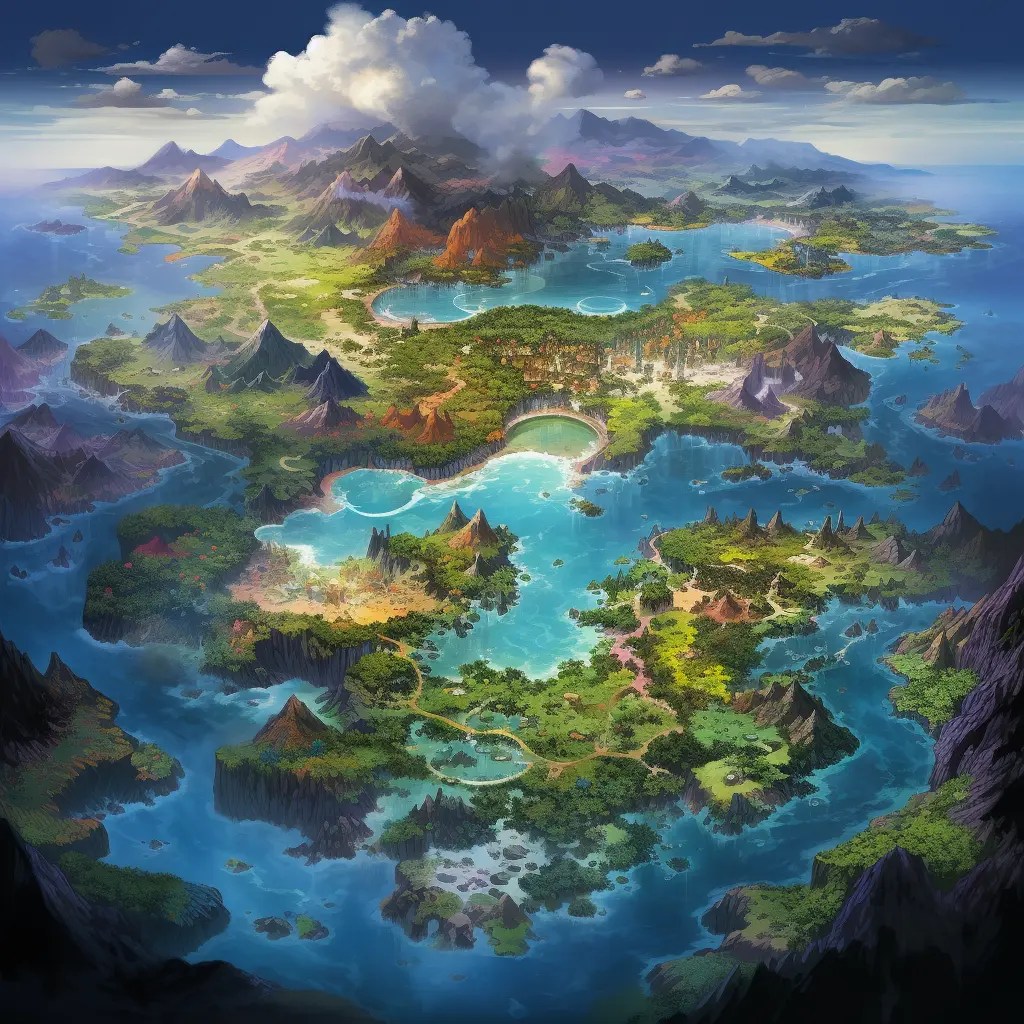
/imagine: a map showcasing a sprawling archipelago with islands of varying sizes. Each island is lush with uniquely coloured flora and connected by silvery, winding water routes. Nestled in the heart of the largest island is a mountain shaped like a sleeping giant.
Lands of the four seasons
/imagine: a worn out map of a continent divided into four distinct regions, each representing a season.

The sunken city atlas
/imagine: an ancient map of a vast, submerged city. Streets are replaced with flowing channels, buildings built from coral, and kelp forests swaying in place of trees. Volcanic vents light up the deeper sections, and pockets of air bubbles hint at secret gathering spots.

Realm of the skyward peaks
/imagine: a vertical map showcasing floating islands at different altitudes. Each altitude has a different ecosystem. The base features dense jungles with cascading waterfalls; the mid-level has misty plateaus and crystal caves; and the highest elevations have snow-capped peaks and clouds weaving between them.

Desert of mirrored sands
/imagine: an old map of an expansive desert landscape where the sands reflect the sky like a giant mirror, creating illusions of deep blue oases. Dotted throughout are ancient ruins, crystal formations, and nomadic tribes riding atop giant, iridescent scarabs.

Mystical forests of nocturne
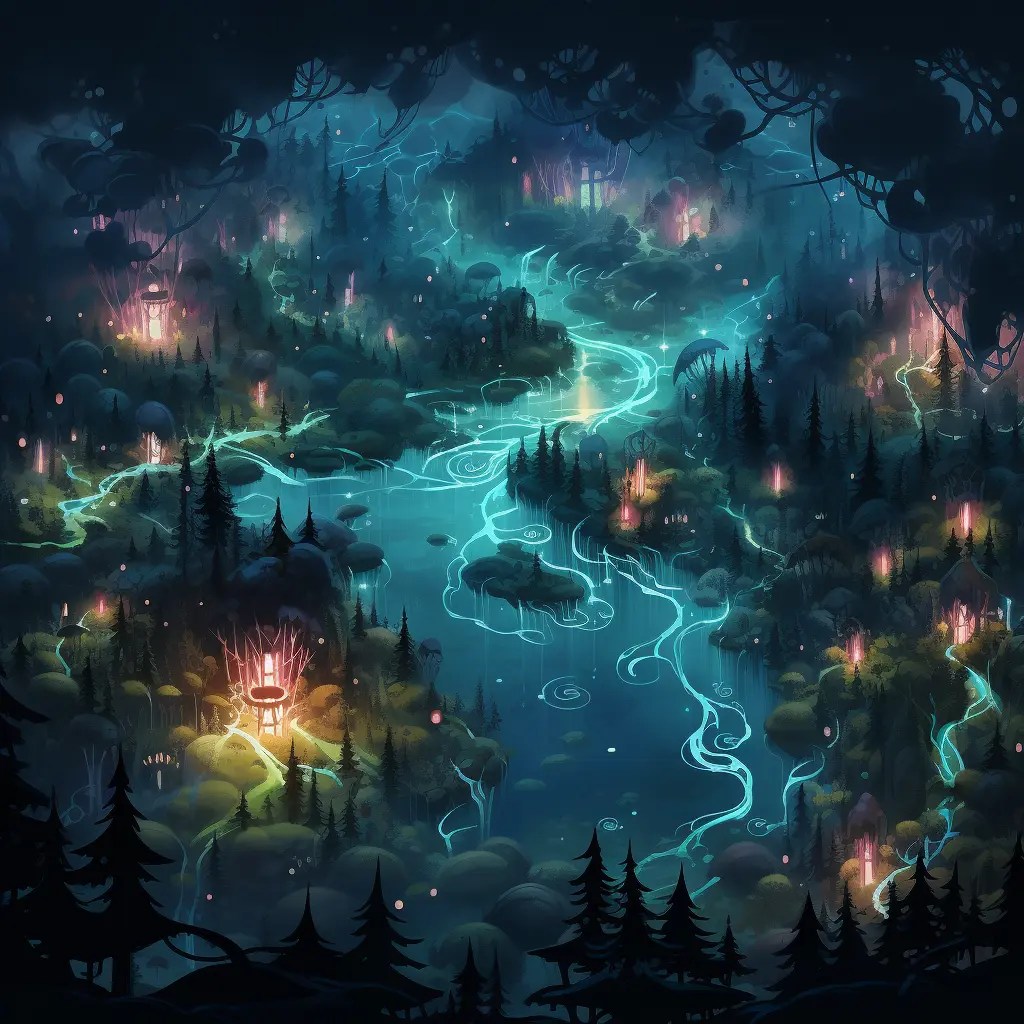
/imagine: a map of dense forests that are in perpetual twilight. Trees have luminescent flowers and bio-luminescent creatures dance through the air. In the forest’s heart lies a lake reflecting constellations not seen in our skies.
Labyrinth city of echoes
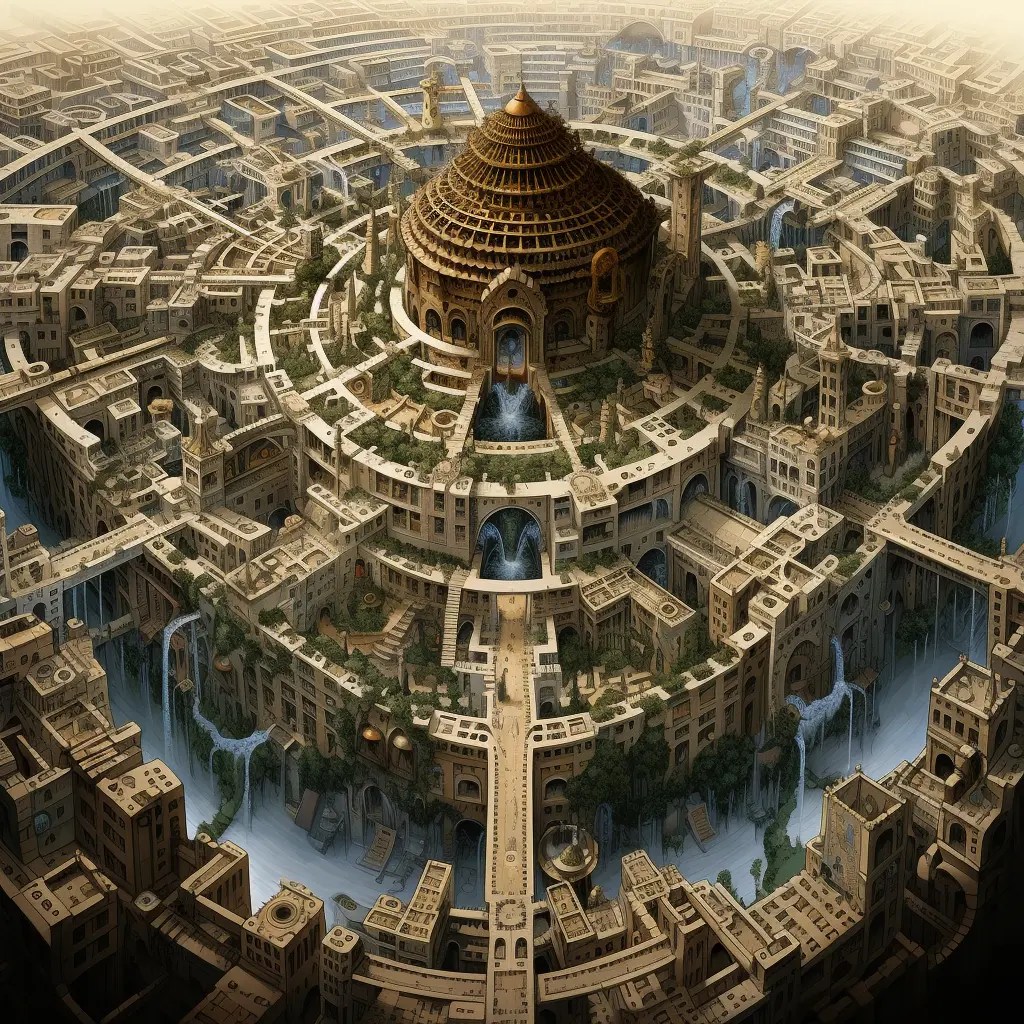
/imagine: An intricate map of a sprawling city built like a maze. Its walls are constructed from polished, sound-reflecting stones. At the centre stands a grand palace with a bell tower. Surrounding it are districts that each have their own acoustic characteristics, from whispering alleys to harmonising squares.