
Perspective has always been a cornerstone in visual art. It dictates how objects are represented in 3D space on a 2D canvas, impacting the viewer’s sense of depth, position, and size. But how do we translate this age-old concept into instructions for Midjourney? The answer lies in precision, terminology, and a sprinkle of creativity.
In this article, we’ll explore the techniques of crafting compelling prompts that breathe life into Midjourney images with perspective. We’ll look at:
- Key tips for writing Midjourney prompts focused on perspective.
- Examples of prompts that incorporate these tips.
- The exciting potential of combining artistic principles with your Midjourney prompts.
Tips for adding perspective to your Midjourney prompts
Writing prompts for Midjourney that focus on perspective can be quite an engaging challenge. Perspective in visual art refers to the representation of objects in 3D space on a 2D plane in a way that looks realistic. Here are some tips:
- Be clear and concise: Midjourney needs clear instructions. Instead of writing “make a scene with a car”, specify the perspective like “draw a car from a bird’s-eye view” or “illustrate a car from a worm’s-eye view”.
- Use established terminology: There are established terms in art for different perspectives. These include:
- Bird’s-eye view (from above)
- Worm’s-eye view (from below)
- Three-point perspective (adding depth)
- Two-point perspective (like looking down a street with buildings on both sides)
- Use these terms to make your prompts more precise.
- Add depth descriptors: Describe how close or far something should appear. For example: “Show a large mountain in the distance with a small cottage in the foreground.”
- Combine perspectives: If you want a more complex image, combine perspectives. For instance: “Draw a city skyline from a bird’s-eye view, but with a close-up worm’s-eye view of a singular skyscraper.”
- Specify horizontal and vertical alignment: Clearly mention if you want an object to appear off-center or leaning. For example: “Position the Eiffel Tower slightly to the right and tilting away from the viewer.”
- Layering details: Describe the elements in layers from foreground, middleground, to background. This helps the AI generate an image with depth.
- Utilise light and shadow descriptions: Light and shadow can also give perspective to an image. “The setting sun casts long shadows from the trees, emphasising their towering perspective over the small tent.”
- Use familiar reference points: By referring to well-known objects or scenarios, you can make it easier for the AI to understand your desired perspective. “Picture it like the camera angle from the top of the Empire State Building looking down.”
- Provide feedback and iterate: After you receive the generated image, adjust your prompt based on what you observe. Refining your instructions in iterative steps can lead to a more accurate representation of your vision.
- Study art and photography: Look at how professional artists and photographers handle perspective. Incorporating their techniques and terminology into your prompts can yield better results.
- Experiment: Sometimes, the best results come from unexpected prompts. Don’t be afraid to get creative and try out different phrasings or ideas to see what Midjourney comes up with.
- Share and collaborate: Discuss with others who are also working on similar projects. They might offer new techniques or phrasings that you haven’t considered.
When using Midjourney, it’s essential to understand that the AI operates based on its training data and might not always perfectly capture the desired perspective in its first attempt. Thus, be ready to iterate and refine your prompts to get the desired outcome.
Example perspective prompts
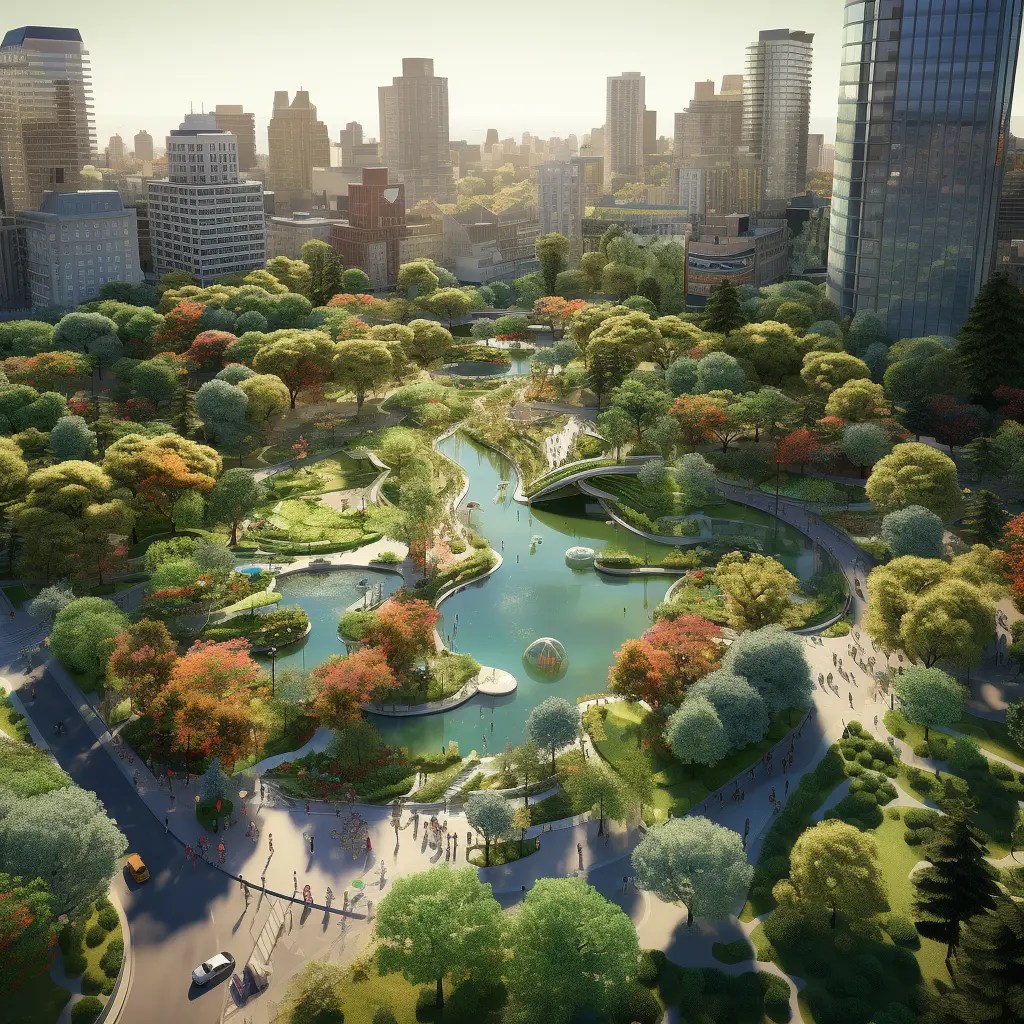
Bird’s-eye view of a city park
/imagine: a bird’s-eye perspective showcasing a bustling city park. The central pond should reflect the nearby skyscrapers, and people should appear as small dots moving along winding paths.
Worm’s-eye view of a forest
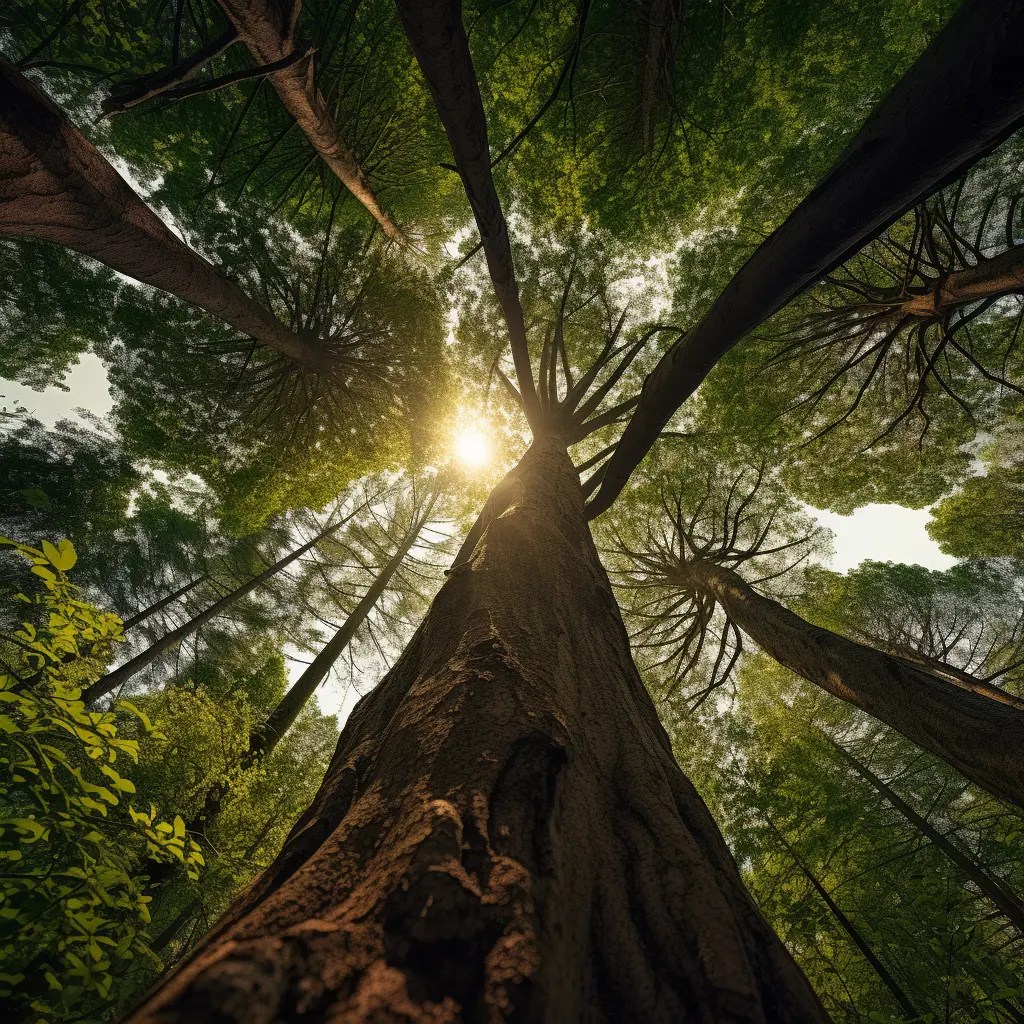
/imagine: a worm’s-eye view of an ancient forest. Giant trees should tower overhead with their canopies converging, forming a natural cathedral.
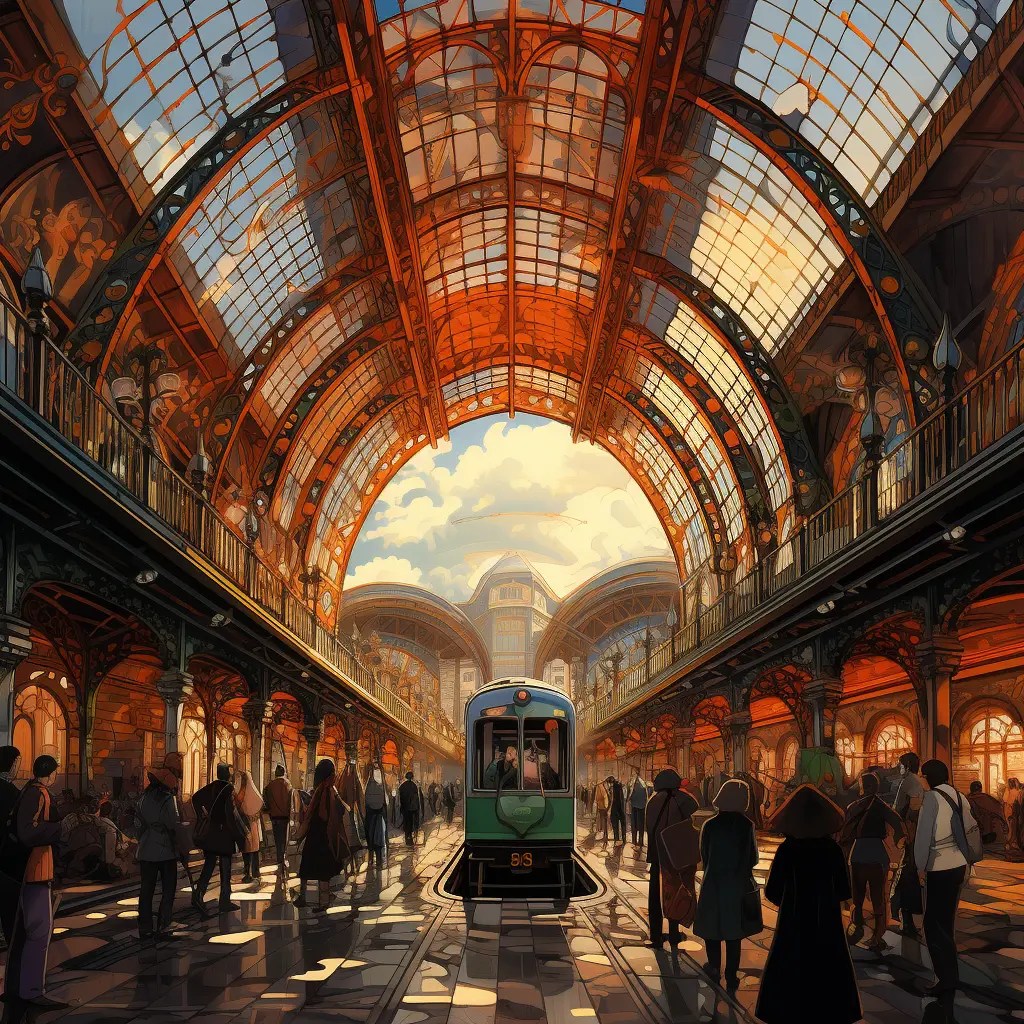
Three-point perspective of a train station
/imagine: a bustling train station using a three-point perspective. The train tracks should converge towards the horizon in the distance. On the nearest platform, passengers should be waiting. Overhead, the station’s intricate ceiling design should add depth to the top of the image.
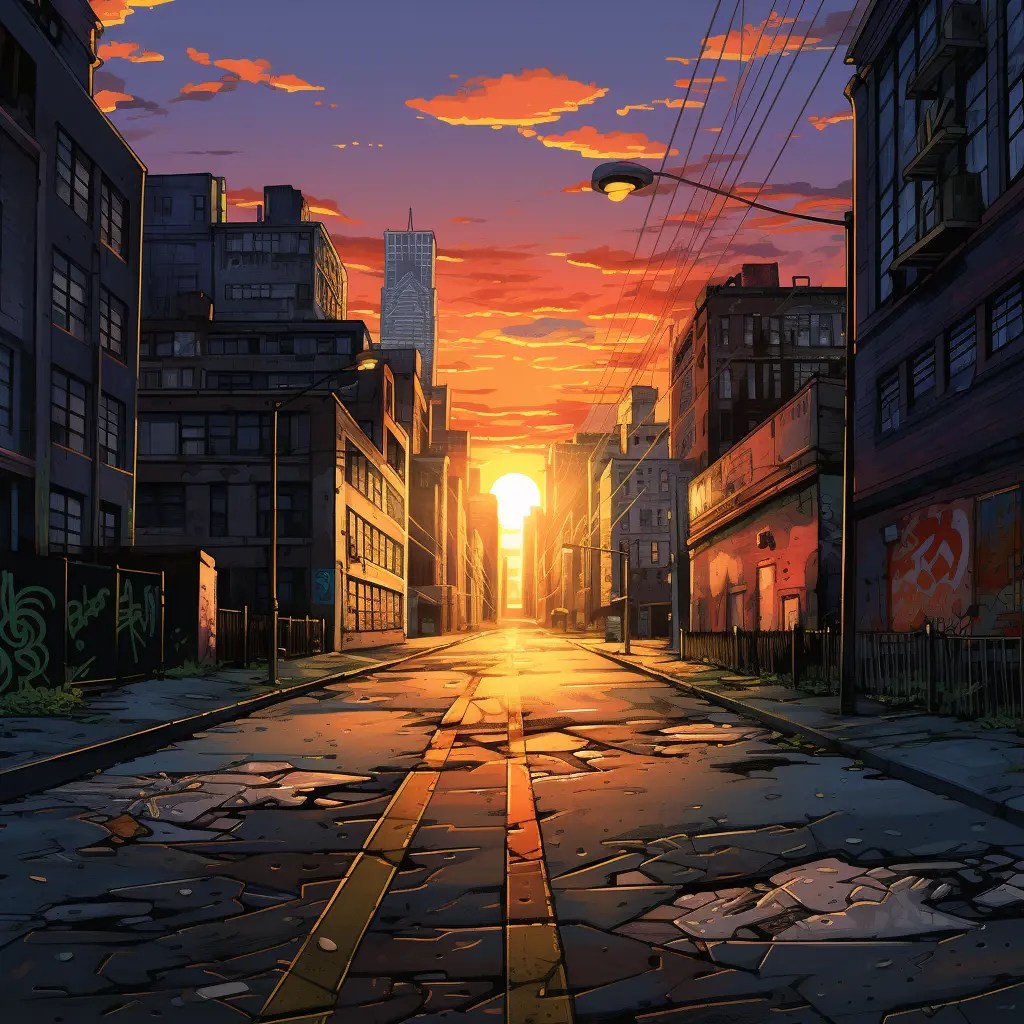
Two-point perspective of a deserted street
/imagine: a deserted urban street at dusk using a two-point perspective. Buildings on both sides should lead the viewer’s eyes towards a distant, setting sun. The closest building on the left has graffiti art.
Off-centre alignment of a mountain landscape
/imagine: a serene mountain landscape at sunrise, with the tallest peak positioned slightly to the right and the sun emerging just behind it.

Layered seaside cliff view
/imagine: a seaside cliff perspective. In the foreground, vibrant wildflowers sway in the breeze. The middle-ground showcases steep cliffs dropping into the turquoise sea. In the background, the horizon meets a pastel sunset.
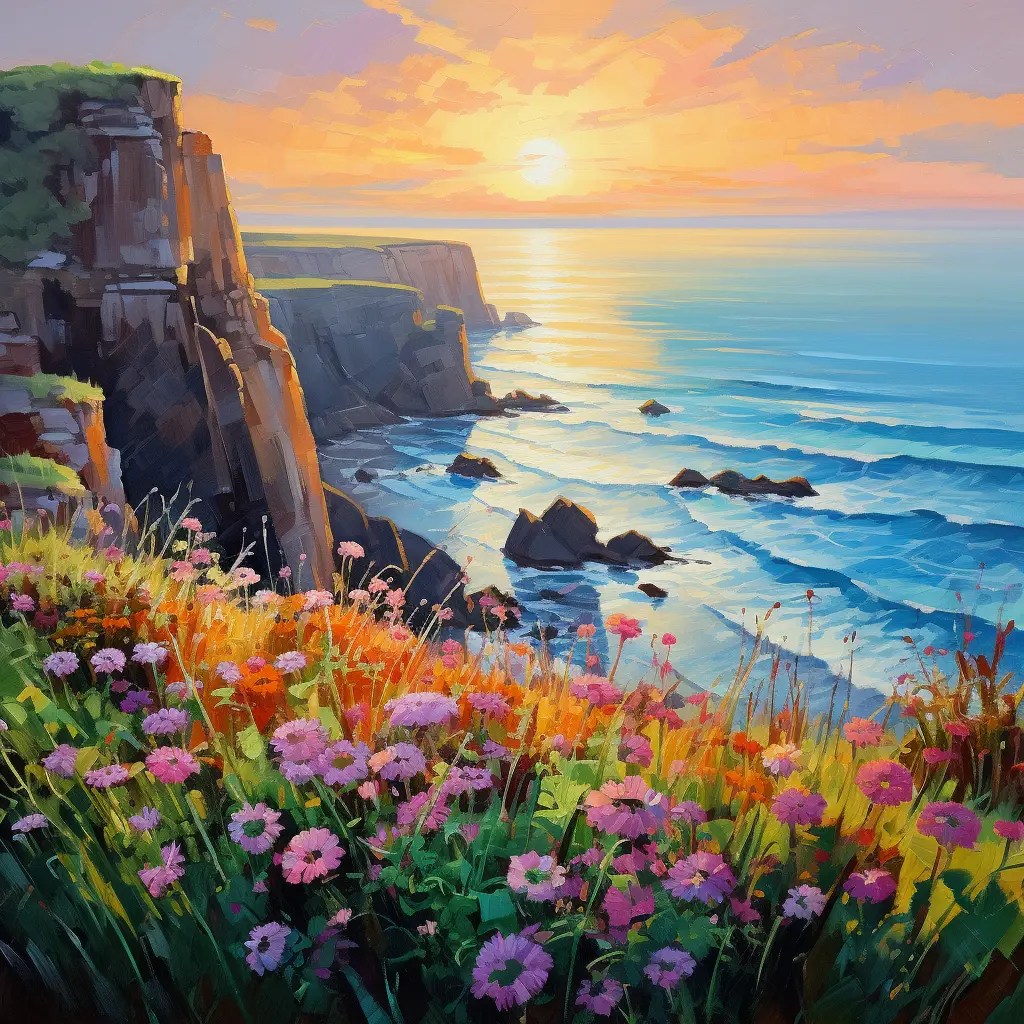
Each of these prompts incorporates elements of clarity, perspective-specific terminology, depth descriptors, layering, and reference to light and shadow to aid the Midjourney in generating detailed and perspective-rich images.