
As a passionate Midjourney and AI enthusiast, I explore a myriad applications of AI in the creative industries, one area that particularly captivates me is the generation of movie posters. These posters are not just promotional materials but a form of art that encapsulates the essence of a movie in a single, impactful image. They evoke emotions, spark curiosity, and often become iconic symbols of the films they represent.
Midjourney, has opened up a new frontier for creating movie posters. The power of this tool lies in its ability to translate simple text prompts into complex visual narratives. But I’ve realised that the key to unlocking the most stunning and effective AI-generated movie posters lies in the art of crafting compelling prompts.
Creating the perfect movie poster prompt is a delicate balance of art and science. It involves a deep understanding of the movie’s core themes, genres, and emotions, combined with an insight into the visual elements that can best convey these aspects to the viewer. The challenge is to distill all these elements into a concise, descriptive text that guides Midjourney without stifling its creative potential.
As I share my experiences and insights, I hope to inspire you to explore this fascinating intersection of AI and movie poster design, unlocking the endless possibilities it holds for storytelling, marketing, and artistic expression.

Above is a Star Wars movie poster that I created in Midjourney v6
Anatomy of a Movie Poster
When I first embarked on my journey to create AI-generated movie posters, I realised the importance of understanding the fundamental components that make up a movie poster.
These are not just random collections of images and text; they are carefully designed pieces of art that tell a story at a glance. To craft effective prompts for Midjourney, I needed to dissect these elements and understand how they work together to capture the essence of a movie.
Note: At the time of writing Midjourney V6 is available. However although it has vastly improved its typography capabilities, it can still be very hit and miss. But I do not doubt that these issues will be resolved in the very near future. So I will continue to discuss text and typography anticipating that the following information will be valuable and need to be considered.
Key Elements of a Movie Poster
- Title: The movie’s title is often the focal point of the poster, designed to grab attention with distinctive typography that reflects the film’s mood and theme.
- Tagline: A good tagline is memorable and encapsulates the movie’s premise or theme in a few words. It’s a powerful tool for setting the tone and piquing interest.
- Imagery: The choice of imagery is critical. It must visually convey the movie’s genre, setting, and atmosphere. Whether it’s a heroic pose of the protagonist, a chilling silhouette for a horror movie, or a vibrant collage for a comedy, the imagery is a visual summary of the film.
- Typography: The style, size, and color of the text (including the title, tagline, and credits) play a significant role in the overall impact of the poster. Typography can evoke a certain time period, emotion, or genre.
- Colour Scheme: Colours are chosen to evoke specific emotions or themes. A romantic movie might use warm, soft colours, while a thriller might opt for a darker, more intense palette.
Bringing Elements Together
Understanding these elements was only the beginning. The real challenge lay in figuring out how they come together to tell a story. Each component must complement the others, creating a cohesive and compelling visual narrative. The imagery and color scheme need to reflect the film’s mood, the typography should enhance the title and tagline’s impact, and every element must be aligned to the movie’s core themes and emotions.
Examples of Iconic Movie Posters
To deepen my understanding, I analysed iconic movie posters, noting how they used these elements to create an unforgettable image. For instance, the poster for “Jaws” uses a simple yet terrifying image of a shark approaching from below, combined with a bold, menacing title font. The color scheme is minimal, using blues and whites to evoke the sea’s vastness and the isolation of potential victims. This poster masterfully conveys the movie’s suspense and horror without a single word of description.
Another example is the poster for “The Great Gatsby,” which uses vibrant colours and Art Deco typography to transport viewers to the Roaring Twenties, reflecting the movie’s extravagant themes and setting.
What have I learnt so far?
Understanding the anatomy of a movie poster was a crucial step in my journey. It taught me the importance of balance and harmony among the visual elements and how to use this knowledge to craft prompts that guide AI in generating posters that are not just visually stunning but also true to the spirit of the movie. This foundation is vital for anyone venturing into the creation of AI-generated movie posters, as it allows for a deeper connection between the film’s essence and the poster’s design, bridging the gap between human creativity and AI capabilities.

Above is a Marvel movie poster I created in Midjourney
Crafting Your Prompt
After immersing myself in the study of movie posters’ anatomy, the next crucial step was to translate that understanding into effective prompts for Midjourney. This journey taught me the delicate art of crafting prompts that are both specific enough to guide the AI and open enough to allow for creative interpretations. Here’s how I navigated this balance:
Identifying Key Themes, Symbols, and Emotions
The first step in crafting a prompt is distilling the movie’s essence into themes, symbols, and emotions. For example, if I were to create a poster for a film like “Inception,” I’d note themes of dreams vs. reality, the symbol of the spinning top, and emotions of confusion and suspense.
This process requires a deep understanding of the film’s narrative and visual language, transforming abstract concepts into descriptive elements that can guide the AI.
Choosing a Visual Style
Selecting a visual style is crucial. It’s about deciding how these themes and emotions should be represented visually. Do you envision a realistic portrayal or an abstract interpretation? Should the style evoke a vintage feel or a futuristic vibe? This decision shapes the overall direction of the output. For “Inception,” I might choose a surreal, dream-like visual style to mirror the film’s exploration of the subconscious.
Incorporating Genre-Specific Elements
Each movie genre has its visual shorthand—space ships and distant galaxies for sci-fi, shadowy figures and dark alleys for noir, lush landscapes for romance.
Recognising and incorporating these elements into your prompt can steer the AI toward genre-appropriate imagery. In doing so, the prompt becomes a mosaic of genre-specific cues that guide the AI’s creative process.
Refining Prompts Based on AI Output
Crafting the perfect prompt is often a process of iteration. Initial outputs might not fully capture your vision, requiring you to refine your prompts. This might mean adding more detailed descriptions, adjusting the emphasis on certain elements, or even simplifying the prompt to give Midjourney more creative freedom. Each iteration brings you closer to a poster that truly resonates with the movie’s essence.
Case Studies: Successful AI-Generated Movie Posters
To illustrate, let’s consider a hypothetical case study. Imagine I’m creating a poster for a classic noir film. My initial prompt might focus on the genre’s hallmark shadowy imagery, a mysterious figure, and a dark, moody colour palette. If the AI’s first attempt lacks the genre’s signature tension, I might refine the prompt to emphasize contrast, add a sense of mystery or danger, or specify more about the character’s expression or posture.
A Dance Between Specificity and Creativity
The art of crafting prompts for movie posters is a nuanced dance between specificity and creativity. It involves a deep dive into the film’s narrative and visual language, an understanding of genre conventions, and a careful consideration of technical requirements.
Through iterative refinement, this process becomes a collaborative journey with Midjourney, leading to posters that are not only visually captivating but also deeply reflective of the movie’s soul.
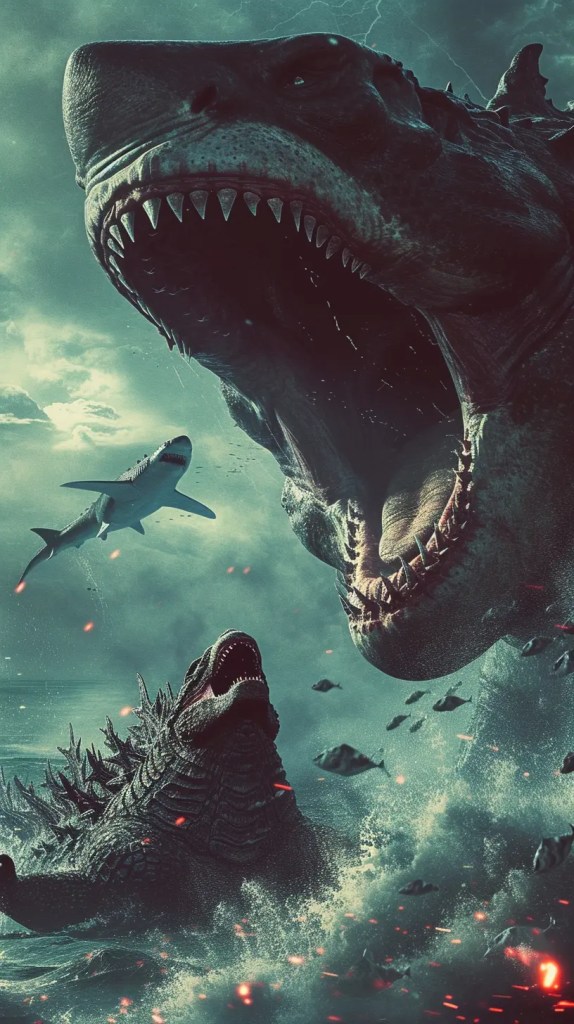
Mega shark vs Godzilla movie poster I created in Midjourney v6
Getting Started with Your Own AI Movie Poster
So you’re now inspired to start this journey yourself, here’s a step-by-step guide to creating your first AI-generated movie poster.
Step 1: Choose Your Movie
Begin with a movie that you love and are familiar with. Your intimate knowledge of its themes, characters, and visual style will be invaluable in crafting a detailed and effective prompt.
Step 2: Analyse the Movie
Break down the movie’s elements as I did in the previous sections. Identify its key themes, symbols, emotions, genre-specific elements, and visual style. This analysis will form the foundation of your prompt.
Step 3: Draft Your Initial Prompt
Using the insights from your analysis, craft your initial prompt. Remember to include:
- Descriptive elements that capture the essence of the movie.
- The visual style you envision.
- Genre-specific details to guide the AI’s direction.
- Any technical specifications necessary for your poster, such as resolution and aspect ratio.
Step 4: Experiment with AI
Submit your prompt to Midjourney. Don’t be discouraged if the first output isn’t perfect; view this as a collaborative process with the AI. Each attempt is a step towards refining your vision.
Step 5: Refine Your Prompt
Based on the output, tweak your prompt. You might need to adjust the level of detail, clarify certain elements, or change technical specifications. This iterative process is key to honing in on the perfect poster.
Step 6: Finalise Your Poster
Once you’re satisfied with the image, you may want to make final adjustments using graphic design software. This could involve tweaking the color balance, adjusting the composition, or adding final text elements like the movie title or tagline.
Encouragement to Experiment
Above all, approach this process with a sense of experimentation and discovery. Each movie poster you create is an opportunity to explore the intersection of AI and art in new and exciting ways. Don’t be afraid to take risks or try unconventional approaches. The unique capabilities of AI mean that the possibilities are as limitless as your imagination.

A romantic comedy movie poster about two velociraptors going on a date. Created in Midjourney v6
Conclusion
Creating movie posters in Midjourney is a fascinating journey that blends the love of cinema with the cutting-edge world of artificial intelligence. By following these steps and embracing the process of learning and iteration, you’ll unlock new creative potentials and ways to express the essence of your favourite films. Whether you’re a seasoned artist or a curious beginner, the world of AI-generated art is ripe with opportunities for exploration and creativity. Let your journey begin.