
In the ever-evolving landscape of technology, the emergence of text-to-image generative AI has opened new horizons in how we visualise and interpret the world around us. Among these innovative tools, Midjourney stands out for its ability to transform written words into vivid images, bridging the gap between textual descriptions and visual representations. As someone deeply fascinated by the intersection of faith and technology, I’ve embarked on a unique exploration to understand how Midjourney interprets biblical descriptions, particularly those of Jesus—a figure central to my faith and countless others around the world.
The portrayal of Jesus in art and culture has a rich and diverse history, shaped by centuries of theological interpretation and artistic imagination. Despite this, the Bible offers minimal details about His physical appearance, leaving much to the imagination and personal belief. This lack of specificity has not deterred artists throughout history from creating representations that reflect their cultural and spiritual contexts. Now, with the advent of AI technology like Midjourney, we stand on the threshold of a new era of artistic creation, where machines can offer us a fresh perspective on sacred texts.
This article aims to explore this very intersection, where divine inspiration meets digital innovation. By feeding Midjourney with descriptions of Jesus drawn from the Bible, I seek to understand how it visualises these sacred texts. This journey is not just about the images produced but about engaging with a profound question: How does a machine interpret the divine? Through this exploration, I hope to offer insights into the potential of AI in enriching our spiritual and artistic landscapes, always approaching this delicate interplay with the utmost respect and sensitivity to the sacredness of the subject matter.
Background
In addressing the task of interpreting biblical descriptions of Jesus through the lens of AI, it’s essential to ground our exploration in an understanding of how the Bible portrays this central figure. Unlike the detailed physical portrayals found in much of classical and contemporary art, the biblical texts offer scant details about Jesus’s physical appearance, focusing instead on His teachings, actions, and spiritual significance. This lack of explicit description presents both a challenge and an opportunity for creativity and interpretation, especially when engaging with advanced technology like AI.
Biblical Descriptions of Jesus
The Bible, across both the Old and New Testaments, is more concerned with the spiritual and moral character of Jesus than with providing a detailed physical description. There are, however, passages that have been interpreted as offering insights into His appearance, though these interpretations often rely more on tradition and artistic convention than on explicit biblical text.
Prophetic Descriptions
Isaiah 53:2 is frequently cited in discussions about Jesus’s appearance, stating, “He had no beauty or majesty to attract us to Him, nothing in His appearance that we should desire Him.” This verse is interpreted as suggesting Jesus’s ordinary, perhaps even unremarkable, physical appearance, emphasising His humility and relatability rather than physical grandeur.
Apocalyptic Visions
The Book of Revelation contains symbolic and visionary descriptions of Jesus that are rich in imagery but abstract in terms of physical likeness. For example, Revelation 1:14-15 describes Him with hair white like wool, as white as snow, and eyes like blazing fire, feet like bronze glowing in a furnace, and a voice like the sound of rushing waters. These descriptions, while vivid, are metaphorical, reflecting His divine nature and authority rather than providing a concrete physical portrait.
Historical and Cultural Context
Any consideration of Jesus’s appearance must also take into account the historical and cultural context of 1st-century Judea. Jesus was a Jewish man of His time, and thus, He would likely have had the physical traits common among Middle Eastern people of that era. This context is important for AI interpretation, as it frames any textual description within the realm of historical plausibility.
The absence of detailed physical descriptions in the Bible invites a wide range of artistic interpretations, influenced by cultural, theological, and personal factors. When engaging an AI like Midjourney to visualise Jesus based on biblical texts, this lack of specificity means that the AI’s output is less about attempting to recreate an historically accurate portrait and more about exploring how contemporary technology interacts with ancient descriptions. This exploration allows for a reflection on the nature of representation, the intersection of faith and technology, and the ways in which AI can offer new perspectives on sacred narratives.
Methodology
In exploring how a text-to-image generative AI like Midjourney interprets biblical descriptions of Jesus, my approach was straightforward yet deliberate, aiming to preserve the authenticity of the scriptural text while engaging with the capabilities of modern AI technology. The methodology involved a simple, direct process: selecting specific biblical quotes about Jesus and inputting them directly into Midjourney. This section outlines the steps taken and considerations made during this unique intersection of ancient text and cutting-edge technology.
Selection of Biblical Quotes
- Identifying Relevant Passages: The first step involved carefully reading through the Bible to identify passages that describe Jesus, focusing on those few texts that offer insights into His appearance, actions, or symbolic representations. Given the scarcity of direct physical descriptions, I also considered verses that spoke to His nature or roles, which could inspire visual imagery.
- Direct Quotes: Once relevant passages were identified, I opted to use direct quotes from the Bible. This choice was made to ensure that the AI’s interpretation would be as closely tied to the scriptural language as possible, minimising personal interpretation or bias in the translation of text to image.
Inputting Descriptions into Midjourney
- Direct Input: For each selected quote, I simply typed or pasted the text directly into Midjourney’s input interface. This method allowed for a straightforward translation of biblical language into visual imagery, relying on the AI’s algorithms to interpret and visualise the descriptions.
- Consideration of Translation and Version: Recognising that the Bible exists in numerous translations, each with its nuances in language, I selected a widely respected and commonly used translation for consistency and to ensure that the AI’s interpretations would be based on a broadly recognised rendition of the biblical text.
- Handling Abstract Descriptions: For more abstract or symbolic descriptions (e.g., those found in Revelation), the direct input method presented challenges, as these passages do not describe physical characteristics in a conventional sense. In these cases, the direct quotes were still used, with an understanding that the AI’s output would be interpretative, offering visual representations of symbolic or visionary descriptions.
Ethical and Respectful Engagement
- Sensitivity to Subject Matter: Throughout this process, I remained cognisant of the deep religious significance of Jesus to many people around the world. My approach was one of exploration and curiosity, rather than an attempt to define or limit the representation of Jesus to any single image or set of images.
- Interpretation of Results: Upon receiving the AI-generated images, I approached them as interpretations rather than definitive representations, recognising the limitations of AI in capturing the full depth of spiritual and historical figures.
This methodology reflects a balance between technological exploration and respect for the sacred texts at the heart of this project. By inputting direct biblical quotes into Midjourney, the aim was not only to see how AI can visualise these ancient descriptions but also to reflect on the broader questions of interpretation, representation, and the role of technology in engaging with spiritual narratives.
The Descriptions and the Generated Images
The following passages range from prophetic and symbolic descriptions to those reflecting His character and mission:
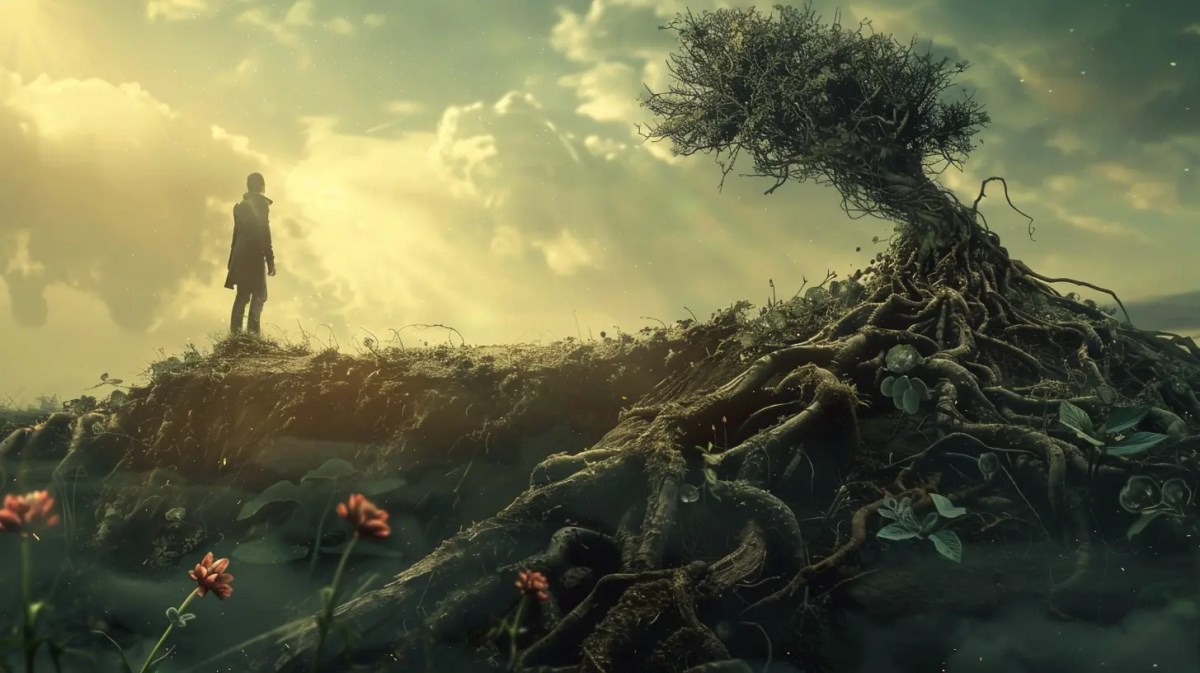
Isaiah 53:2 (Prophetic Description – Old Testament)
“For he grew up before him like a young plant, and like a root out of dry ground; he had no form or majesty that we should look at him, and no beauty that we should desire him.”
This passage from Isaiah is often interpreted as a prophecy about Jesus, suggesting His ordinary, humble appearance and the lack of worldly majesty.
Revelation 1:14-15 (Symbolic Vision – New Testament)
“The hair on his head was white like wool, as white as snow, and his eyes were like blazing fire. His feet were like bronze glowing in a furnace, and his voice was like the sound of rushing waters.”
This description comes from the Apostle John’s vision on the island of Patmos and is rich in symbolic imagery, depicting Jesus in a glorified state.

Matthew 8:20 (Reflecting His Earthly Ministry – New Testament)
“Jesus replied, ‘Foxes have dens and birds have nests, but the Son of Man has no place to lay his head.'”
This quote reflects Jesus’s itinerant lifestyle and His voluntary choice of poverty during His earthly ministry, emphasizing His humility and identification with the marginalised.

Philippians 2:7 (Character and Humility – New Testament)
“Rather, he made himself nothing by taking the very nature of a servant, being made in human likeness.”
This passage from a letter by Paul to the Philippians highlights Jesus’s humility and willingness to serve, central aspects of His character and mission.
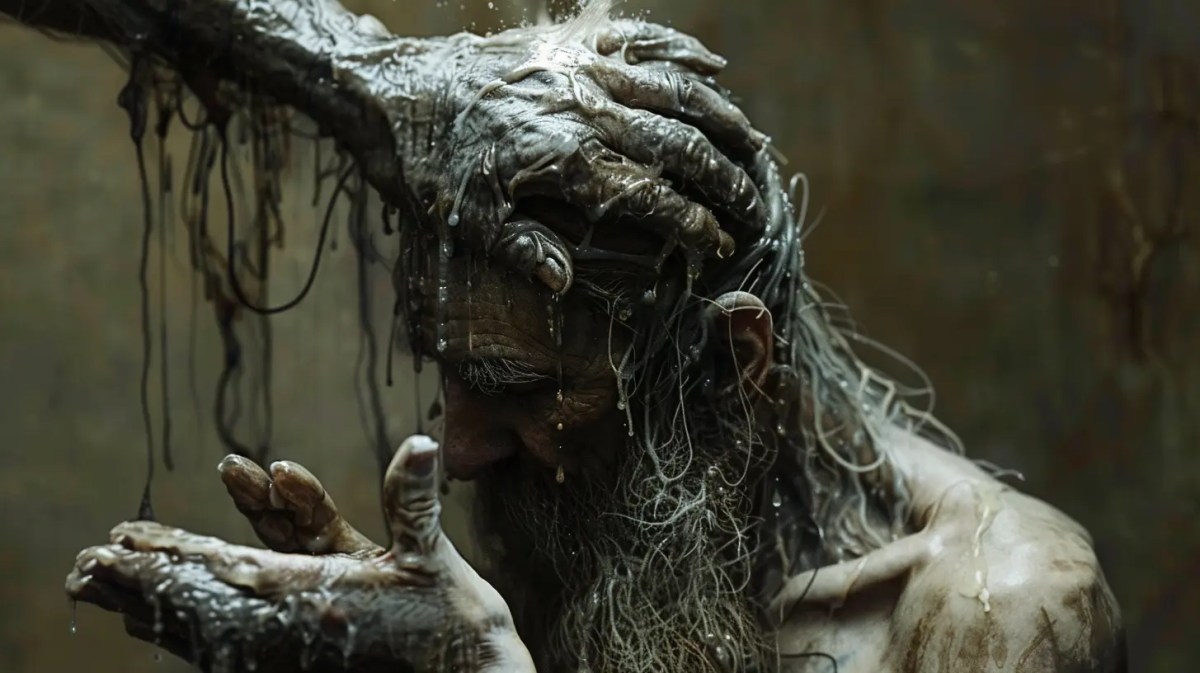
Hebrews 4:15 (His Compassionate Nature – New Testament)
“For we do not have a high priest who is unable to empathize with our weaknesses, but we have one who has been tempted in every way, just as we are—yet he did not sin.”
This verse emphasises Jesus’s empathy and ability to understand human frailty, underscoring His sinlessness and compassionate nature.
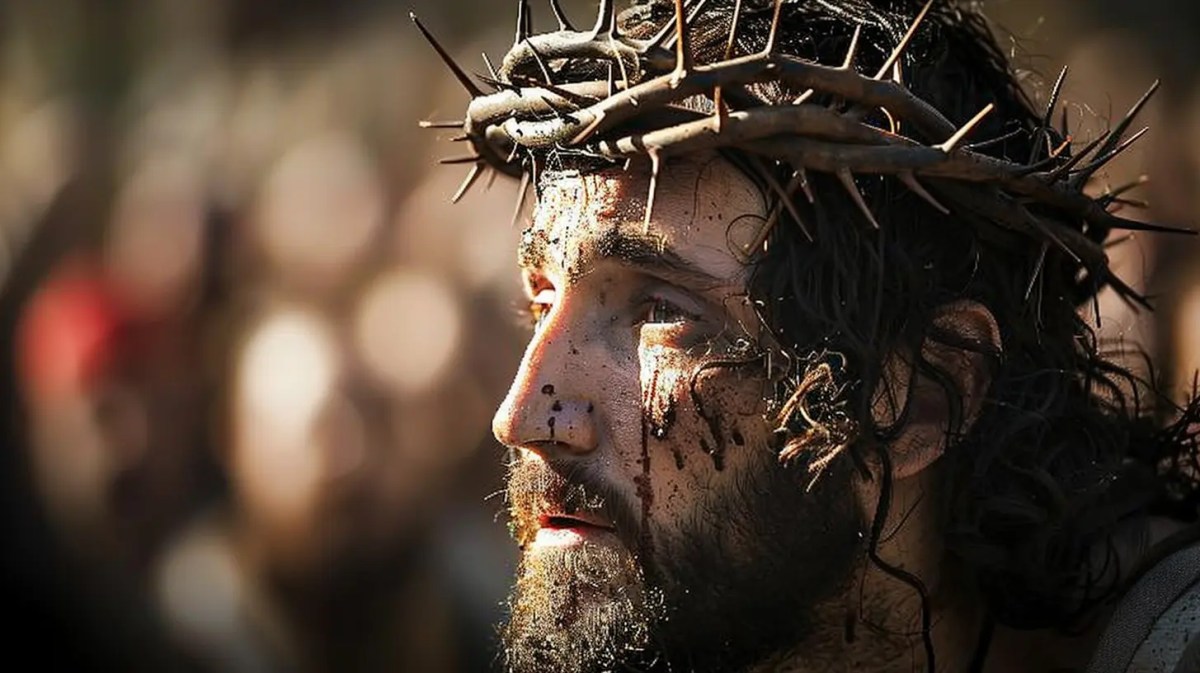
These passages offer a multifaceted view of Jesus, touching on His prophesied role, divine nature, earthly ministry, humility, and compassionate character, providing a rich source for both theological reflection and artistic inspiration.
Conclusion
Concluding this exploration, Midjourney’s ability to create stunning and evocative imagery from direct biblical quotes has been both enlightening and inspiring. The process revealed not only the power of AI in interpreting text but also its capacity to invoke deep reflection on the person of Jesus, transcending traditional boundaries of artistic representation. The images generated, some of which bore a contemporary likeness to Jesus, were particularly striking, given that none of the selected quotes provided explicit descriptions of His physical features. This unexpected outcome underscores the AI’s interpretative creativity, drawing on a vast array of visual data to conceptualise a figure as historically and spiritually significant as Jesus in ways that resonate with modern sensibilities.
This exercise has proven to be a fascinating way to engage with sacred texts through the lens of cutting-edge technology. The results—images that variably capture the essence of Jesus as described in the Bible—invite us to consider the intersection of faith, art, and AI in new and profound ways. It’s a testament to the evolving relationship between human creativity and technological advancement, offering fresh perspectives on timeless truths.
Moreover, the exercise has opened up avenues for contemplation about how technology can serve as a tool for spiritual and artistic exploration. The images generated by Midjourney, while derived from ancient texts, speak to contemporary hearts and minds, suggesting that the divine can be envisioned in ways that bridge past and present, tradition and innovation.
In conclusion, using Midjourney to visualise biblical descriptions of Jesus has been an immensely rewarding venture. It highlights not only the potential of AI to aid in our understanding and appreciation of religious narratives but also its role in creating a space where faith and technology intersect harmoniously. As we move forward, this exploration serves as a reminder of the endless possibilities that await at the nexus of human curiosity and artificial intelligence, urging us to continue seeking new methods to enrich our spiritual and artistic endeavours.